
The Doxology
A Hymn for When Gratitude Overflows
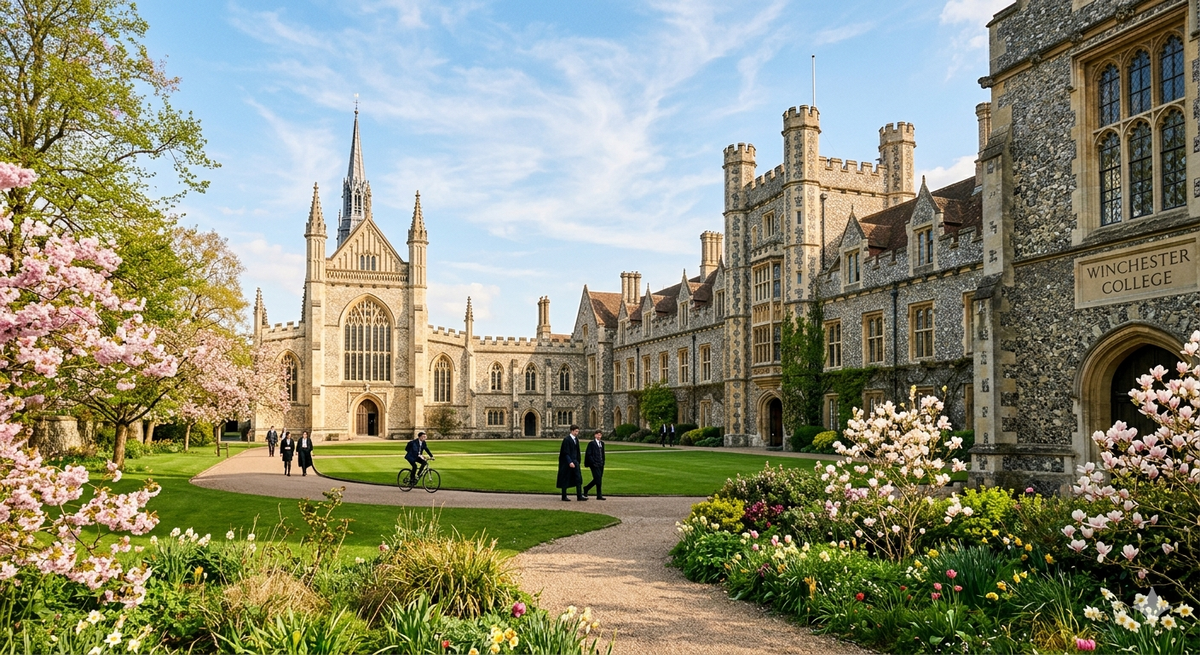
In 1674, Thomas Ken was serving as a chaplain at Winchester College in England. Ken was known for his fierce integrity, famously refusing to let King Charles II house his mistress, Nell Gwyn, in his home. His attention wasn’t on court politics but on the spiritual formation of the young students entrusted to him.
Seeing their need for simple, steady rhythms of devotion, he wrote A Manual of Prayers for the Use of the Scholars of Winchester College. Tucked into the appendix were three long hymns- one for morning, one for evening, and one for midnight (for those restless, wakeful hours). Each hymn ended with the same four-line stanza:
Praise God, from whom all blessings flow;
Praise Him, all creatures here below;
Praise Him above, ye heavenly host;
Praise Father, Son, and Holy Ghost.
At the time, the Church of England primarily sang only the Psalms and was deeply suspicious of hymns written by ordinary people. Ken instructed his students to sing these hymns privately in their rooms, never in the chapel.
But beauty has a way of slipping past boundaries. By the time Ken died in 1711, those final lines had already begun to spread. When they were later paired with the tune Old 100th (originally composed for Psalm 100) the combination became so beloved that the stanza stood on its own. Today, it is likely the most frequently sung piece of music in the English-speaking world.
Why It Matters to Us
I love that this song began with a teacher who wanted his students to remember God in the ordinary hours of their day. That is certainly how I have used it. If the Lord’s Prayer is what we pray when we don’t know what to pray, then the Doxology is what we sing when we don’t know what to sing.
It’s foundational—an anchor in the Christian imagination, a tool in every believer’s toolkit, an arrow in every quiver. I teach it to children and new believers. My own kids learned it in their pre‑K program and sing it often. And for me, it’s the first thing that rises to the surface when gratitude hits me like a wave.
A Moment of Recognition
Last year, I reread The Secret Garden with my then‑fifth grader. As a child, before I knew Christ, the ending didn’t strike me the way it does now. In the final chapters, Mary, Colin, and Dickon attribute the healing of the garden, and Colin’s own transformation, to a mysterious force they call “The Magic.”
One afternoon, overwhelmed by the beauty around them, they decide they must do something to acknowledge this “Magic.” Old Ben Weatherstaff suggests there’s a song for such a moment. “Th’ Doxology,” he says. “It’s what they sing i’ church. It’s a bit o’ Magic if ever there was one.”
He begins to sing. Dickon joins him. And though Mary and Colin have never heard the song, they pick it up quickly and join the praise.
It’s a powerful scene, and one that now feels like a small revelation. Ben is right. It is a bit of magic if ever there was one.
When gratitude wells up so quickly it steals your breath, the Doxology gives us language. It gathers our scattered awe and turns it toward the Giver. Ken wrote it for students who needed a simple way to center their hearts—and centuries later, it still steadies ours. It is the song we reach for when we have no words, the melody that rises when our hearts overflow. Praise God, from whom all blessings flow.