The Holy Work of Not Pretending
Why are you asking?
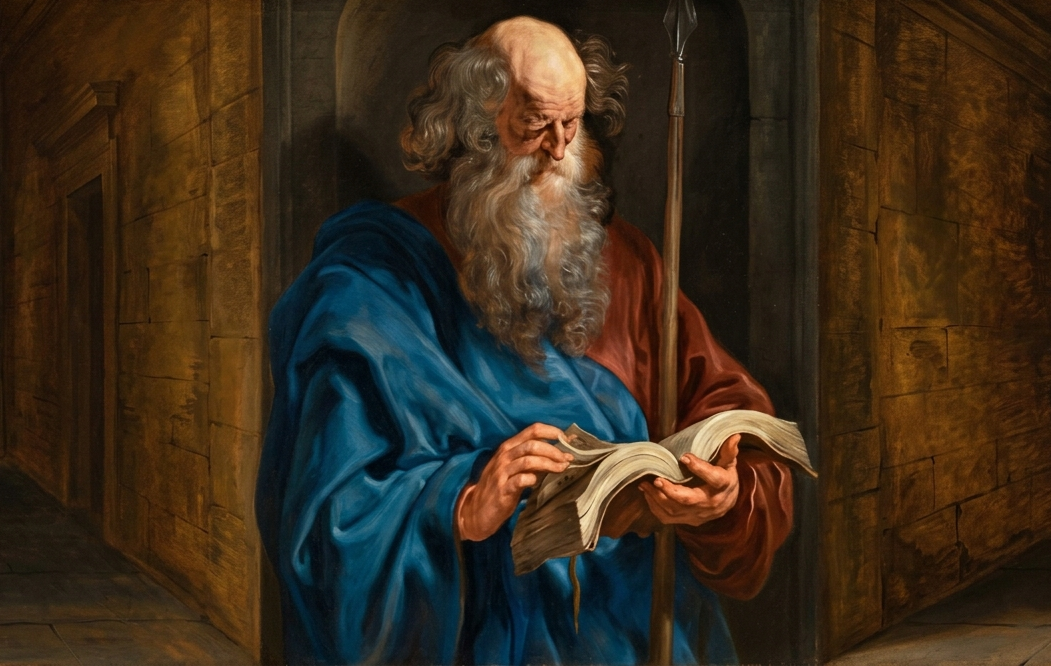
Everyone knows Doubting Thomas. Even people who have never cracked open a Bible know the label. It’s shorthand for an extreme skeptic—someone who demands an unreasonable amount of proof for something plainly true. I heard it on a TV show recently: one character (a very committed non-believer) jabbed a friend by calling him a “Doubting Thomas.” Naturally, I laughed and started jawing at the screen, pointing out the hypocrisy (or is it irony) of using the term. They clearly don’t know who Thomas is! He was… an apostle… who doubted.
Oh goodness.
I grabbed the Bible I keep by my bed and flipped through the Gospels and Acts. I had missed it. Or rather, I had accepted the label of Doubting Thomas as the whole story. Shame on me. But when I actually looked at the passages where Thomas appears, three things leapt off the page.
First: When word came that Lazarus was dying, Jesus said He would go to him. The disciples reminded Him that the last time they were in that region, the crowd had tried to stone Him. They knew going back meant danger—possibly death. They didn’t understand the spiritual purpose of the visit, but they absolutely understood the physical stakes.
And Thomas said, “Let us also go, that we may die with Him.” (John 11:1–16)
If Jesus was going, Thomas was going. If it meant death, then so be it. That's the very definition of Ride or Die. Thomas was all in.
Second: In the upper room (John 14:1–7), Jesus is laying out mysteries the disciples can barely grasp. He says He is going to prepare a place for them, and that they “know the way.”
Thomas speaks up: “Lord, we do not know where You are going; how do we know the way?”
Jesus responds with one of the most iconic declarations in Scripture: “I am the way, and the truth, and the life.”
Earlier, when Peter asked for clarification, Jesus rebuked him and predicted his denial. I imagine the others thinking it might be safer to keep quiet and let the moment pass. But not Thomas. He asked because he needed to know. If Jesus was going somewhere, Thomas wanted to be there—and he wasn’t afraid to ask for directions.
Bless you, Thomas, for asking, so that Jesus could answer.
Third: Then we reach the moment that earned him his infamous nickname (John 20:19–29). Thomas misses Jesus’ first appearance and says he won’t believe unless he sees and touches the wounds.
But let’s slow down.
Why did Thomas miss the first appearance? Why wasn’t he locked in the terror bunker with the others? They were afraid to leave the room, but Thomas wasn’t. He had already resolved back in John 11 that if following Jesus meant death, then so be it. Something needed doing, and Thomas was the one who went out to do it. Remind me again why Thomas isn't famous for his courage?
And honestly, I’m not convinced he doubted the Resurrection itself. He may have doubted the disciples. These were the same men who had been hiding in fear. Maybe they had lost their minds. Maybe grief had overtaken them. A mass hallucination isn’t impossible.
Regardless, Jesus appears to Thomas—and He doesn’t scold him. He doesn’t mock the high bar Thomas set. He meets him in it. He uses Thomas’ exact words, as though He had been standing in the room when Thomas said them. He proves not only that He is alive, but that He is with Thomas, even when unseen.
Unbelief born of grief or a sincere desire for truth is not the same as hard-hearted skepticism.
And while the text doesn’t say whether Thomas actually touched the wounds, this moment becomes a hinge for the entire future of faith. Thomas is the last person to believe because he saw Jesus. Everyone who comes after—including me—is blessed because we believed without seeing.
But we owe something to Thomas, who asked for proof. He was my stand‑in. When I was early in my spiritual walk, making ridiculous demands and insisting God prove Himself (embarrassingly juvenile, I know), people called me a Doubting Thomas and I looked up what that meant. I didn’t yet see his courage. I didn’t yet see his loyalty. I didn’t yet see that he stands at a major inflection point in the story.
But I did see this: When Thomas struggled to believe, Christ met him in his unbelief. And Christ met me in mine.
Thomas is not the mascot of skepticism. He is the patron saint of the honest questioner—the one who refuses to pretend, who wants to be where Jesus is, who asks for clarity, who walks into danger, who names his doubt out loud. And Jesus meets him there. That is the inheritance he hands down to us: not doubt, but a God who does not fear our questions.
A Blessing for the Ones Who Won’t Smile and Nod
May the God who welcomed Thomas’ honest questions teach us to welcome them too.
May He give us discernment to tell the difference between disruption born of pride and inquiry born of longing.
May He soften our impatience with those who ask again, and again, and again—not to argue, but to understand.
May He guard the sincere from being mistaken for the stubborn, and the curious from being dismissed as the difficult.
May He bless every heart that refuses to trade real knowing for polite agreement.
And may He meet you—right in the middle of your questions—with the same gentleness He showed Thomas, proving once again that He is not threatened by your need to understand, but delighted to draw you deeper in.