
Joseph of Arimathea
The Insider Who Stepped Into the Light
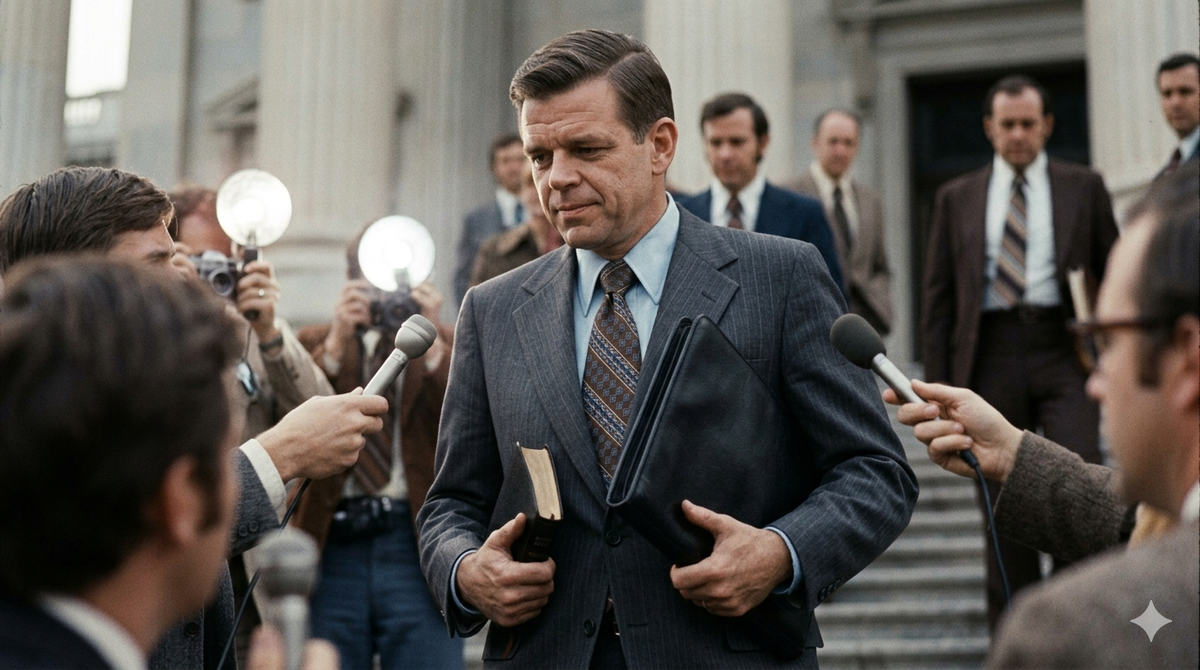
Studying Joseph of Arimathea leaves me strangely frustrated — not because of what Scripture says, but because of what it doesn’t. I understand why film and TV writers start filling in the gaps. His story has cinematic weight: a powerful insider, a dangerous moment, a quiet act of courage that changes everything. And yet the Gospels give us only a few verses, just enough to know we’re seeing the tip of something vast and hidden. The temptation to imagine the rest of the story is powerful.
Part of me wanted to shrug and say, “Well, I’ll meet him one day, and won’t that be brilliant? Anyway, moving on..” But another part of me wondered if I really had to wait until the other side to have my curiosity sated. Maybe there’s a way to explore the intrigue without wandering into heresy. After all, Joseph isn’t the only man in history who has walked this kind of path. Sometimes the lives of others cast a sideways light on the ones Scripture leaves in shadow.
I can actually think of a few examples of people who followed this “Joseph of Arimathea model.” Bonhoeffer immediately comes to mind because a movie about him is currently in my streaming queue. How about instead we talk about one that apparently does have a movie, but it is just begging for a modern re-telling. This one is set in the 1970s.
Chuck Colson, as it happens, is shockingly similar to Joseph of Arimathea. If Joseph was the insider of the Sanhedrin who stepped into the open at the most dangerous moment, Colson was the insider of the American political temple who did the same during its greatest collapse.
The High Place: The Sanhedrin of the 70s
Joseph was a respected member of the Council (Mark 15:43). Colson held an equivalent seat in his own world — Special Counsel to the President, the “office next to the Oval Office.” He wasn’t just wealthy or influential; he was a man whose decisions could shift global events.
Both men lived in the inner ring. Both were trusted. Both were feared. Both had everything to lose.
The Dissent: Reputational Suicide
Joseph’s defining moment was simple and seismic: he gathered his courage and asked Pilate for the body of Jesus. In the eyes of the Sanhedrin, this was betrayal. It was reputational suicide.
Colson’s moment came in 1973, when Watergate was devouring the White House. Someone handed him Mere Christianity, and the Spirit did what the Spirit does. Instead of using his legal brilliance to protect himself, he did the unthinkable — he pled guilty. His peers thought he had lost his mind. Power protects itself; it does not confess.
But like Joseph, Colson aligned himself with Christ at the exact moment when doing so cost the most.
The Sacrifice: Losing the World
Joseph risked his seat on the Council and his social standing. Colson’s losses were immediate and public. He served seven months in federal prison. He was disbarred. He went from dining with heads of state to being inmate number 23226‑037.
Both men stepped out of the high place and into obscurity. Both did so willingly.
The Tomb: Giving the Best to the Least
Joseph used his own new tomb — a symbol of wealth and legacy — to honor a man the world had condemned.
Colson did something similar with the rest of his life. Instead of writing a lucrative tell‑all, he founded Prison Fellowship. He took his insider knowledge, his intellect, his connections, and buried them in service to those society had discarded.
Joseph gave his tomb. Colson gave his future.
Both offered their best to the least.
The Joseph Parallel: Going to Pilate
What strikes me most is the timing. Joseph didn’t come forward when Jesus was multiplying loaves or calming storms. He came forward when Jesus was dead and the movement looked finished.
Colson didn’t find God when it was politically advantageous. He confessed Christ — and his own guilt — when the entire world was watching, when the cost was highest, when the cause looked lost.
Both men walked into the office of power and said the thing that would undo them. Both traded the high place for a grave or a cell. And in doing so, both found a different kind of influence — the kind that outlives titles, administrations, and councils.
Why This Matters for Us
I love that Joseph’s story tugged at me. He is a reminder that God often forms His people in hidden places, behind closed doors, in the rooms where compromise is easy and courage is costly. Joseph’s few verses are a window into a truth that spans generations: God has always had insiders who choose faithfulness over self‑preservation.
And that pattern didn’t end with him.
It surfaced again in Colson, who walked into a courtroom and told the truth when the entire world expected him to lie. It surfaced in Bonhoeffer, who refused to baptize the Reich and paid for it with his life. It surfaces in men and women whose names we will never know — people who stand up for Christ when the moment is least convenient, least strategic, least safe.
And one day, it may surface in us. We may be handed a moment that feels eerily familiar- a moment when the cause looks lost, when the crowd is hostile, when silence would be easier, when speaking up feels like stepping into your own grave.
In that moment, we are not just reading Joseph’s story — we are standing inside it. And the choice before us is the same one he faced:
Will we protect our place, or will we identify with Christ?
Will we cling to the high seat, or will we step forward when the body of Jesus is still warm from the cross and the world is still laughing?
Joseph of Arimathea, Chuck Colson, Dietrich Bonhoeffer, David Green, Chiune Sugihara, many others — they are not exceptions. They are invitations. Their courage is not meant to intimidate us but to show us what ordinary faithfulness looks like when the stakes are high.
They stepped into the light when it cost everything.
And by the grace of God, so can we.
A Short Benediction for Courage
May you be steady when your moment comes — when standing with Christ is costly, when silence would protect you, when the high place whispers its comforts.
May you remember Joseph, Colson, Bonhoeffer, and all who chose the Light when it cost them everything.
And may the same Spirit who strengthened them strengthen you to step forward, to speak truth, to bear witness, and to find, on the other side of courage, the nearness of Christ Himself.
Go in that courage. Go in that lineage. Go in His name.