
Biblical Fanfic
Does it have to be so bad?
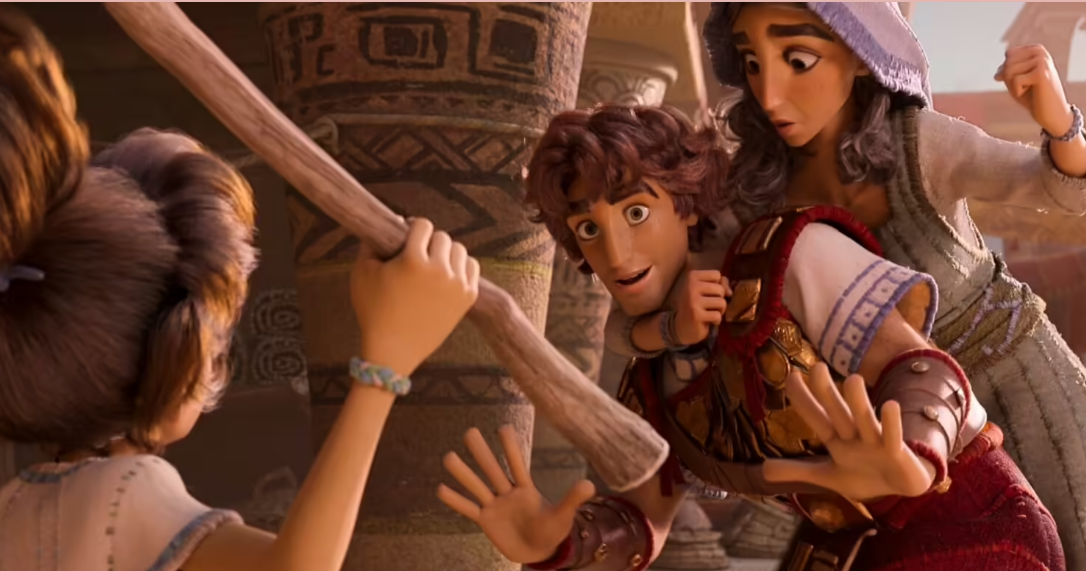
I judge people a little when they tell me they love The Chosen. I understand the desire to immerse yourself in Jesus, and at first glance the show seems like an easy way to stay in that devotional headspace. It’s certainly more wholesome than most things you could stream. If God is keeping score, you probably earn a couple of good‑boy points for watching it. Extra credit if you don’t scroll your phone at the same time.
We tried watching it for a while. Like everyone else, we were impressed by the production value. I wasn’t sure why Matthew was portrayed as an autistic Indian man, but I appreciated the attempt to distinguish the disciples and make them 3-dimensional. The problem came when I noticed Scripture starting to wear the faces of the actors. My imagination was being quietly overwritten and that started to bother me. That’s the danger of adaptations: the book is always better, and the screen inevitably rewrites the mind’s eye. It can't be helped. I picture Martin Freeman as Bilbo now instead of the 1970s cartoon (and I’m not sure if that’s an upgrade or a downgrade).
As episodes of The Chosen went on, the rewrites grew bolder. Extended conversations and arguments between the disciples while Jesus performed miracles off-screen. The woman at the well received a long, embellished interaction that felt unnecessary. I finally had to step away when Jesus declared to a mob in Nazareth, “I AM THE LAW!”
That was a bridge too far. Fulfillment of the Law and the Prophets, yes. Identification as the Law, no. Scripture does not support that claim. There is a canyon between illuminating the text with human detail and distorting the text with invented theology or altered motives. The Chosen crossed that line in a way something like The Prince of Egypt — chariot races and all — never did.
The Two Traps of Biblical Fanfic
Adaptations of biblical stories usually fall into one of two dangerous ditches-
Theological Distortion. This happens when imagination turns into dogma. Melchizedek is the classic example. The text gives us a mysterious priest‑king of Salem who brings bread and wine and has “no beginning of days or end of life.” Because Scripture leaves him intentionally enigmatic, speculative fiction mutates easily into fringe theology, gnostic myth‑making, or cultic lore. When silence in the text becomes a blank check for inventing new spiritual realities, things get dangerous fast.
Modern Psychological Projection. This happens when ancient figures are given a 21st‑century interior life. Suddenly everyone is somewhere on the spectrum of gay and neurodivergent. It’s not interpretation; it’s projection. It’s probably most egregious and obvious in cinematic renditions of Bible stories, but this one is actually extremely common in your typical Sunday School class. One minute you’re reading Job and the next minute someone in the class is detailing their personal plight of being an overwhelmed parent who interacts with difficult people. That is another form of psychological projection, not empathy as the Sunday schooler may believe. I am quicker to forgive that trap at church because I’ve encountered so many Bible studies that encourage and facilitate it (* cough * Lifeway * cough *). When the warm up question is along the lines of, “Have you ever been frustrated by someone not listening to you,” then you are being set up to completely miss the point of a lesson about Stephen and engage in some superficial moralistic therapy.
Does it have to be so bad?
I quite like historical fiction, and I think there is a way to explore Biblical text without undermining the theological meaning or adding emotional and psychological arcs that simply aren’t there. Rather than changing the motives to make it more interesting, like giving David some mommy issues or a resentment toward shepherding, I think it is possible to imagine the story without violating the moral texture of the text. You can spend extra time in that world without rewriting it. Why would you rewrite it? It's already perfect. If Esther is portrayed as an ambitious beauty‑pageant contestant rather than a terrified orphan forced into a harem, the story is no longer Esther.
Extrapolation asks- given the culture, the text, and human nature, what might this have looked like? Can you imagine the logistics of a 127-province banquet or the scratchy weight of sackcloth in a Persian courtyard? Adding texture without altering meaning could actually be quite helpful (when not heretical).
Why Esther Is on My Mind
Biblical fanfic normally makes me cringe so hard I can feel it shave weeks off my life. But I feel the book of Esther challenging me in a way I’ve not experienced before. The book is so compressed that every sentence feels like a tightly wound spring. The tension is enormous. I want to unpack it.
When a text is that compressed, it practically begs for a slowed‑down retelling — not embellishment, not invention, but space. The physical tension of Mordecai sitting in sackcloth at the king’s gate while Haman struts past. The suffocating silence of Esther’s chambers. The terror of walking uninvited into Xerxes’ throne room where a single golden scepter stands between life and death.
For the first time in my life, I feel compelled to write fiction, but God help me if it should wander off into fanfic territory. My imagination is sparked by this story in particular in a way I’ve never experienced. I know I’m not the first. There are certainly versions of Esther out there where she becomes a feminist icon overthrowing patriarchy and Mordecai becomes a bitter political activist. The ancient Near Eastern world of honor, shame, covenant, and providence gets tossed aside for cheap girl‑power points or modern political messaging. Can I extrapolate this text without veering off the rails?
Plenty of Esther adaptations exist — Hollywood epics, faith‑based films, international productions. I haven’t watched them, though I suspect the Joan Collins version from the 1960s is bad in the delightful Mystery Science Theater way. Most adaptations seem to treat the speed of chapters 3 and 4 as a problem to solve. Because the text offers no psychological exposition, screenwriters feel compelled to invent villains, romances, or action sequences to stretch the runtime. Why not just stay in what's written?
I’m interested in the stark tension of the biblical text itself. I don’t want to fill in what Scripture leaves blank. I want to slow the pacing enough for the moment to breathe. The drama is a foreigner surviving under an erratic, absolute monarch while trusting an unseen God. That tension is captivating.
So indulge me.
My next few posts will be a slowed‑down retelling of Esther 3 and 4. I’m calling it Mordecai the Jew.
It might be terrible, but I have enjoyed writing it. I'll go back to my normal stuff when I've gotten this out of my system.