
Such A Time As This
Separated by 2,500 years, anchored in the same land, held by the same God.
I recently completed Bilquis Sheikh’s memoir I Dared to Call Him Father, which details her conversion from Islam to Christianity in Pakistan in the 1970s. I’ve heard it said that Muslims who convert frequently report being visited by Jesus in a dream or a vision, and her memoir is an intimate firsthand look at such an experience. I picked up the book a bit skeptical, to be honest, and was moved by how consistently her dreams, feelings, and visions led her directly to Scripture to hear what God was saying. I was quite fascinated by her descriptions of physically feeling both the presence of God and its absence as she tried to dial in what it meant to walk in faithful obedience. I appreciated getting a glimpse of her inner thoughts and feelings as she weighed the cost of public confession and the calling and timing of the Lord.
Against this portrait of Bilquis’ Sheikh’s life, I found myself studying Esther. There is a striking cross-cultural and spiritual bridge between these women. Both stories are set in the same location- the geographic and cultural shadow of the East (ancient Persia and modern Pakistan). Both stories center on women navigating high-stakes environments defined by male-dominated power structures, ethnic or religious pressure, and the threat of severe social ostracism or death.
Parallel Worlds of Privilege and Vulnerability
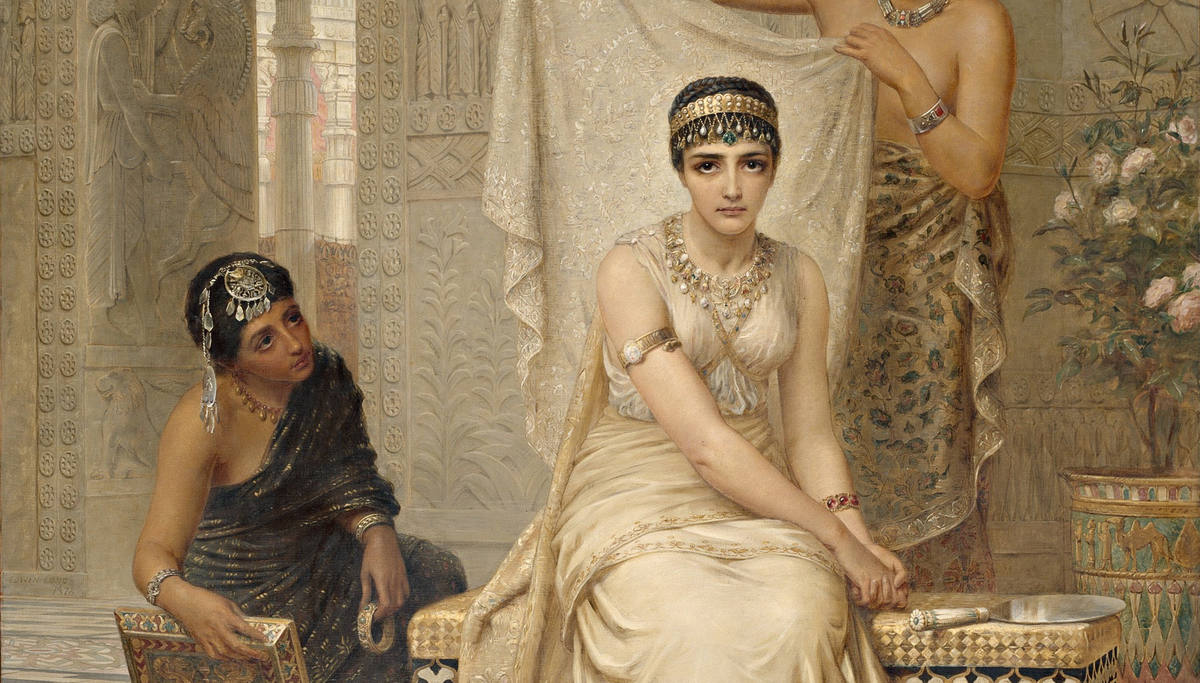
Both women begin their stories insulated within high walls of privilege. Esther is hidden inside the royal harem of Susa, surrounded by Persian opulence, cosmetics, and eunuchs, completely cut off from ordinary life. Bilquis lives in a grand estate in Wah, Pakistan, surrounded by lush gardens, servants, and enjoys the high-society status as the wife of a government official. Both live in worlds of outward security masking profound spiritual vulnerability.
For Esther, stepping into the inner court of Xerxes uninvited meant risking immediate execution unless the king extended his golden scepter. For Bilquis, turning away from Islam to embrace Christ in Pakistan meant stepping outside the law and social protection, inviting the wrath of her powerful family, death threats, and total societal rejection. Both women faced a moment where confessing their identity carried a literal death sentence.
Just as Esther operates in a secularized court where God’s name is absent, Bilquis’s journey begins with a profound sense of isolation- her husband has left her, her status is fracturing, and she is searching desperately for peace. Yet in both cases, an unseen God is orchestrating circumstances: in Esther, through uncanny coincidences of history; in Bilquis, through unmistakable, supernatural dreams, a hidden Bible, and divine appointments that relentlessly draw her toward truth.
The Hidden God and the Revealed God
While the structural parallels are fascinating, the differences reveal why Christianity stands infinitely supreme over the systems, cultural religion, and human maneuvering depicted in both books. In Esther, identity is concealed. It is unclear if this is for survival or convenience, but Mordecai tells Esther not to reveal her Jewish heritage. Blending into the pagan machinery seems rather easy to accomplish. Having just read Daniel and contemplating what it means to be in the world and not of it, there is temptation to judge Esther harshly for hiding her identity as a Jew so completely. Until circumstances escalate, there is no indication that any aspect of her life reflects her Jewish identity- no secret prayers, no special diet. Belonging to Israel may be in her blood and in her bones, but it is not in her identity. Her big reveal comes as a true surprise within the narrative.
In I Dared to Call Him Father, Bilquis cannot hide her faith. Christianity does not permit believers to blend into the shadows of the empire; it brings them out into the light of a true identity. Her transformation requires a radical, transparent break with a system that demands a different allegiance. A changed heart and a changed life are observed in Bilquis before she confesses the reason for the change. The light cannot be hidden.
A Human King vs. a Heavenly Father
Esther must bow before a capricious human king who could execute her on a whim, where favor is fickle and conditioned on beauty and obedience. Even when she succeeds, her people are granted safety under a Persian edict, but they remain subjects of an earthly throne.
The legalistic religious system of Pakistan seems just as prone to fickleness and whims. Honor killings, murder plots, and violent mobs are simply part of the Islamic culture. Bilquis’s entire journey moves from cowering before a distant, legalistic religious system to experiencing the warm, personal, loving adoption of the Creator of the universe. An earthly king's scepter cannot compare to the open arms of a heavenly Father.
Empires Rise and Fall — Adoption Endures
Esther operates on a macro, national scale. It is a brilliant historical chess match to save an ethnic group from physical extermination so that the lineage of promise can continue. It’s a challenging read as a character study, primarily because of the role Esther serves in the story and the context of her narrative. Chronologically, Esther overlaps with Ezra. Israel is entering the silence that will stretch for the next 400 years until Jesus Christ is born. And in this silence, in the story of Esther where God is not mentioned, His hand is at work- keeping His people safe enough that the line can continue…
Continue to Christ... Continue to Bilquis.
Bilquis’s memoir operates on a micro, spiritual scale- the fierce, personal rescue of a single soul from spiritual death. The only reason Esther's lineage was preserved across centuries of Persian, Greek, and Roman rule was so that this very grace could eventually be unlocked for humanity- that sinners anywhere, in Muslim-dominated Pakistan, or Atheist America could drop the weights of earthly survival and dare to call God "Father".
Reading Esther through the rearview mirror of Christ, and alongside a modern testimony like Bilquis Sheikh's demonstrates that earthly empires, whether ancient Persia or modern ideological states, are temporary instruments. They rise, pass laws, issue decrees, and crumble. God truly does have providence over all things. He is before all things and by Him all things come together.
Esther survived by playing the politics of a dark palace. Bilquis survived by abandoning the politics of her culture entirely and yielding to a living Savior. Both point to the same ultimate reality: God is sovereign over kings, but His ultimate desire is not merely geopolitical survival. It is an intimate, permanent adoption into His family.
In the end, both Esther and Bilquis stand as witnesses to the same truth Mordecai voiced in Susa: perhaps you were put here for such a time as this. Their stories remind us that God’s providence is never abstract. It is personal, intentional, and unfolding in the lives of ordinary people who find themselves caught between fear and obedience. Esther preserved a lineage; Bilquis received the grace that lineage was meant to deliver. And we, too, have been placed in our moment, not by accident, but by a Father who writes the story and invites us to step into it.