The Song in the Womb: A Mother’s Day Meditation
The womb becomes the altar where the divine and human meet.
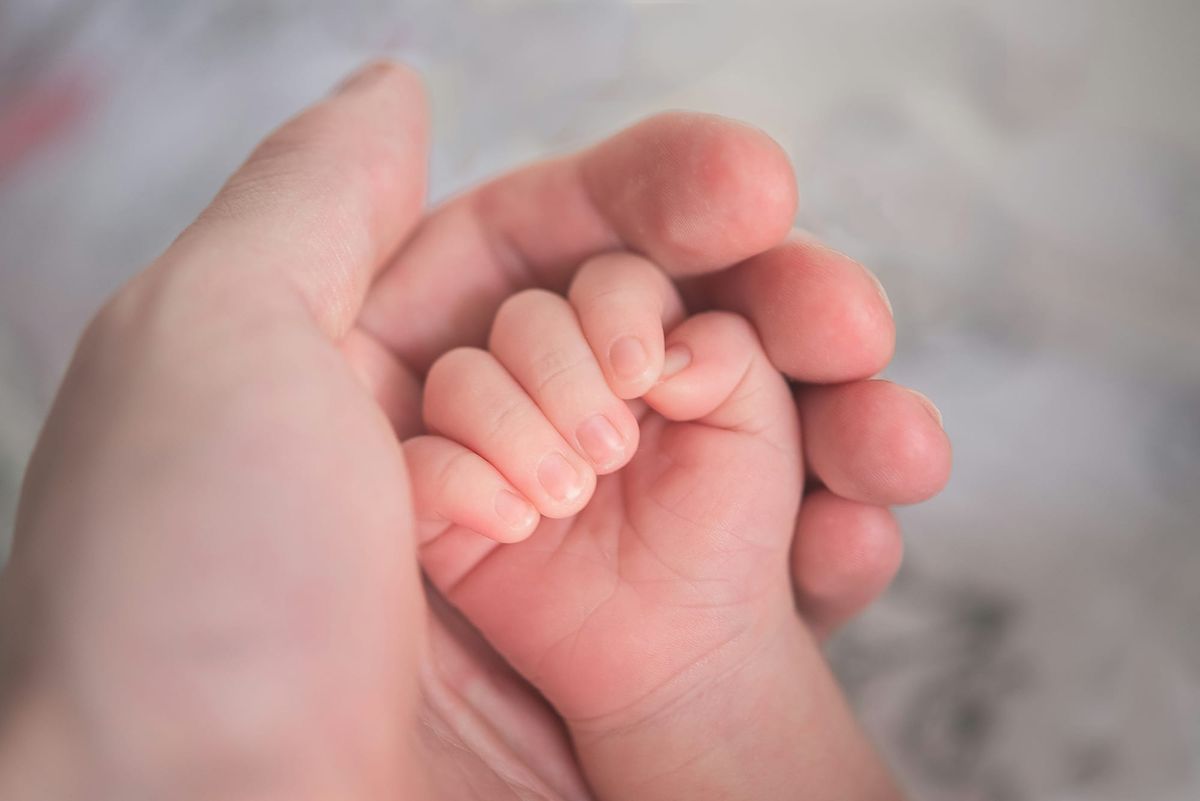
Mother’s Day isn’t a holy day on the church calendar, but motherhood itself is holy ground. Not because of sentiment or brunch or greeting cards, but because Scripture keeps returning to the womb as the place where God reveals His nature. Again and again, God chooses motherhood as His stage — the place where His seeing, His hearing, His remembering, and His redeeming become visible.
When you look closely, you start to hear it- a song running through the mothers of Scripture. A chorus of women whose bodies become the meeting place of divine attention and human vulnerability.
The First Voices: Sarah, Hagar, and Leah
The song begins with three women whose stories could not be more different — yet each reveals something essential about God.
Sarah: God brings life out of the impossible
Sarah’s laughter is the first impossible birth. Her womb is the place where God proves that nothing is too hard for Him. She teaches us that motherhood is not merely biology; it is a canvas for divine creativity.
Hagar: God sees the invisible
Then comes Hagar — the woman nobody wanted, the woman pushed out, the woman who runs into the wilderness alone. And it is there that God meets her. She becomes the first person in Scripture to give God a name:
El Roi — the God who sees me.
Before God is revealed as King or Judge, He is revealed as Witness. Hagar teaches us that motherhood is honored by God even when it is dishonored by people.
Leah: God dignifies the unloved
Leah is not barren. She is not cast out. She is simply unwanted. And yet God sees her misery and opens her womb. When she names her son Reuben — “See, a son!” — she is declaring that God has looked upon her with tenderness. Leah teaches us that motherhood is a place where God restores dignity to the overlooked.
Three women. Three wounds. Three revelations.
Impossible. Invisible. Unloved.
And God meets each one in the place where life begins.
The Middle Movement: Hannah and Elizabeth
As the story of Scripture unfolds, the song grows more layered.
Hannah: God hears the unheard
Hannah’s prayer is silent. Her lips move, but no sound comes out. Eli sees her and misunderstands her, but God sees her and hears her. When she names her son Samuel, she is making a confession:
God has heard.
Hannah teaches us that motherhood is a partnership with God — a stewardship of a life that ultimately belongs to Him.
Elizabeth: God remembers the forgotten
Elizabeth is old, faithful, and overlooked. Yet God remembers her. Her pregnancy becomes the sign that the long silence between the Testaments is ending. Another “impossible motherhood” becomes the place where God restarts the story.
The Crescendo: Mary
And then the music swells.
Mary steps into the song, not as a woman longing for a child, but as a woman chosen to carry the Child — a woman who, by traditional definitions, wasn’t ready. Her Magnificat echoes Hannah’s song: the God who flips the social order, who lifts the lowly, who fills the hungry.
But Mary takes the melody to its ultimate conclusion:
God does not just give life — He becomes life.
The womb becomes the altar where the divine and human meet.
The Creator becomes the created.
The Word becomes flesh inside a woman’s body.
Motherhood becomes the mechanism of the Incarnation.
The story of Scripture is not embarrassed by the body.
It is not shy about the womb.
It is not hesitant about motherhood.
God keeps choosing it — again and again — as a place where He reveals Himself.
The Echo: Mothers Today
This is not just an elaborate play to get my children to behave better on Mother’s Day — though it never hurts to remind them that the mandate to honor your father and mother is the first commandment with a promise. Fulfilling this is a direct act of obedience to the divine order.
But that’s not the point.
The point is the unmistakable chord that seems to strum every time I read about pregnancy in Scripture — a chord that hums within me and within every mother across history. Every woman who cries out to God — in longing, in fear, in exhaustion, in gratitude — joins this ancient chorus. Every pregnancy, every adoption, every spiritual mothering, every act of nurturing becomes a small incarnation... a physical sign that God is still seeing, still hearing, still remembering, still bringing life out of nothing.
Motherhood is not a “holy day,” but it is a holy echo.
The labor of a mother is the closest human reflection of God’s own creative and sustaining work. The womb — literal or metaphorical — is still the place where God plants His promises.
When I look at Sarah and Hagar and Leah, at Hannah and Elizabeth and Mary, I don’t just see ancient women. I see the shape of my own story. I see the God who sees me, hears me, remembers me, and entrusts me with life — not because I am The World’s Best Mom, but because He is faithful.
I love this song.