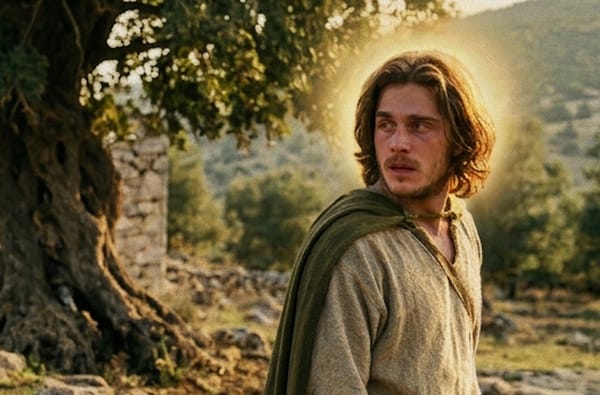
The Mystery Man in Eight Verses: My Side Quest into Melchizedek
Against this backdrop, it doesn't only make sense that Hebrews spends time on this, but it cannot be overstated how totally controversial it is!
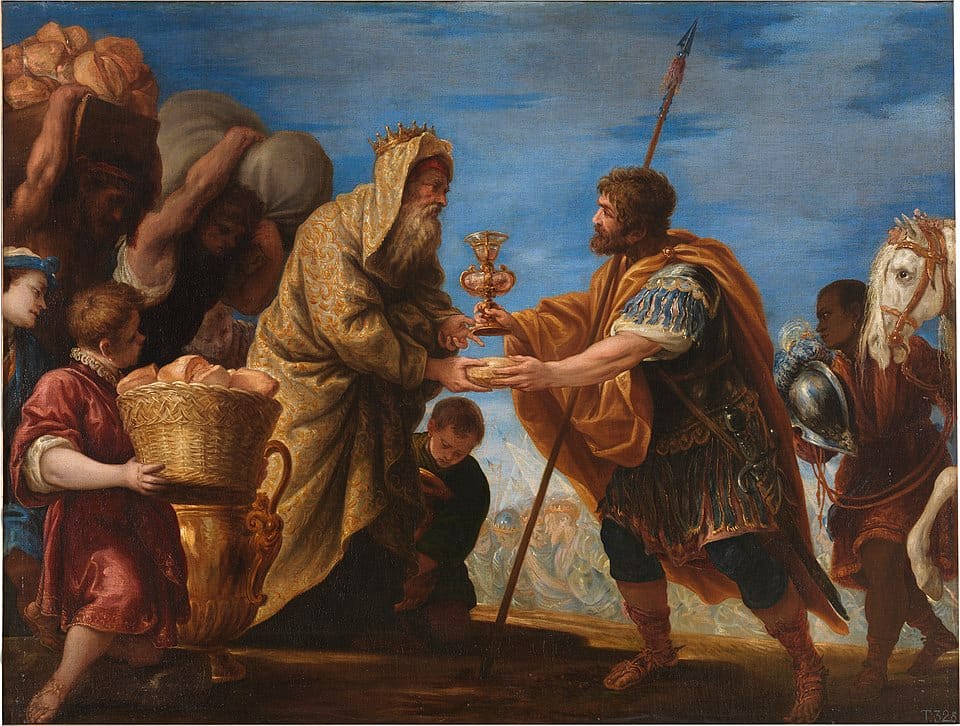
I sat down to do a simple character study and somehow ended up on a full-blown side quest about Melchizedek. You know how it goes: you’re reading along in Genesis, minding your own business, when suddenly a mysterious priest-king appears out of nowhere, blesses Abraham, receives an offering, and then vanishes into the narrative mist. Eight verses. That’s all we get.
A single line in Psalms mentions his “order.” Then Hebrews devotes three entire chapters to him, insisting that the silence around his story is the whole point.
I try not to wander too far outside Scripture when studying Scripture… but this one practically begs for a field trip. And apparently, I’m not the first to feel that way.
Ancient Israelites approached the lack of information about Melchizedek like a riddle to be solved, and once I started digging, I was shocked by how much lore was out there—and how completely buck wild some of it is.
Let me take you on the tour.
Melchizedek the Celestial Judge (Qumran / 11Q13)
In the library of the Qumran community, specifically a document called 11Q13, Melchizedek is not just a local king, he’s a heavenly being- A divine agent of God’s judgment. The one who will execute the final vengeance against Satan and his spirits at the end of time.
This is Melchizedek as cosmic warrior—less “mysterious priest” and more “angelic commander of the end of days.”
It’s a far cry from the quiet king of Salem offering bread and wine.
Melchizedek the Miracle Baby (Slavonic Enoch)
Then there’s the Slavonic Book of Enoch, which gives him an origin story that reads like a superhero comic.
According to this tradition, Melchizedek was born miraculously—fully clothed, speaking, and marked with the “seal of the priesthood” on his chest. To protect this holy child from the coming Flood, the archangel Gabriel swooped in and carried him to the Garden of Eden for safekeeping. It’s unclear if he has a weakness to kryptonite.
Melchizedek the Cosmic High Priest (Nag Hammadi / Gnostic Texts)
The Gnostic texts found at Nag Hammadi take a different approach. Here, Melchizedek is a Holy Warrior of Light—a pre-incarnate Christ figure who undergoes spiritual crucifixion and resurrection long before Jesus.
He becomes a cosmic high priest who helps human souls escape the material world.
It’s mystical, symbolic, and very different from Jewish tradition, but it shows just how compelling this figure became in the ancient imagination.
Melchizedek as Shem (Rabbinic Tradition)
And then there’s the interpretation that was actually the most common in Jesus’ day: Melchizedek is Shem, the son of Noah.
This view shows up in Targums and Midrash. It solves the puzzle of a priest before the Aaronic priesthood by identifying him as the eldest living patriarch of the human race. Shem lived long enough to meet Abraham, so the story goes, and that explains why a random king would bless him—it was the passing of the spiritual torch.
But there’s a twist.
In Genesis, Melchizedek blesses Abraham before blessing God. According to the lore, that was a mistake. As punishment for those disordered priorities, the priesthood is taken from Shem and given to Abraham’s descendants.
This was the mainstream view in the first century. Most Jews heard Scripture through Aramaic paraphrases, and multiple Targums explicitly replace “Melchizedek” with “Shem.” So, the average synagogue-goer wasn’t hearing a mystery at all, they were hearing family history.
Why Hebrews Spends Three Chapters on Him
Against this backdrop, it doesn't only make sense that Hebrews spends time on this, but it cannot be overstated how totally controversial it is! The author isn’t writing into a vacuum; they’re addressing a bubbling cauldron of Jewish mysticism around Melchizedek—and directly contradicting the Shem theory.
By emphasizing that Melchizedek has no genealogy, Hebrews is saying: This silence is intentional. This is not Shem. This is something else entirely.
The lack of ancestry becomes a theological point, a literary device meant to reveal a priesthood older than Levi, older than Moses, older than the covenant at Sinai. A priesthood that exists outside normal human lineage. A priesthood Jesus can belong to.
Early Christians had a dilemma: Jesus was from the tribe of Judah, not Levi. According to the Shem theory, that disqualified him from priesthood.
Hebrews responds with a bold claim: There is a higher, more ancient priesthood that isn’t based on genealogy at all. Jesus doesn’t need to be a Levite because he belongs to the order of Melchizedek.
And here’s where things get interesting.
If Melchizedek was not Shem but a gentile king-priest who worshiped the true God, then:
- God was working with people outside the Jewish covenant long before Moses.
- The priesthood was never exclusively ethnic.
- Christianity isn’t a new religion—it’s a return to something older and more universal.
Melchizedek becomes a symbol of God’s global reach, a reminder that the story has always been bigger than one family line.
Hebrews tells us the story is already amazing, there is no need to add anything to it. And yet, in the mystery, people continue to claim Melchizedek to lend credibility to their various cults and wack-a-doo ideas to this day.
The Jerusalem Question
Now, if the city of Jerusalem belongs by ancestry, then Shem founded it and passed it to Abraham. The priesthood is biological, tied to the temple and its rituals.
But Hebrews presents a different vision:
- Jerusalem is the seat of the eternal priest.
- Jesus is that priest.
- The city’s spiritual authority belongs to his followers.
- The priesthood is spiritual, tied to the resurrected Christ.
- The holy land is not a zip code but a kingdom.
This reframing was radical in the first century… and still is! It’s remarkable how frequently this debate comes up and fascinating how passionately even Christians defend a variety of perspectives regarding Jerusalem.
I didn’t expect to fall down this rabbit hole. I certainly didn’t expect to find miracle babies, cosmic warriors, and ancient debates about priesthood and Jerusalem’s identity.
But the more I read, the more I appreciated what Hebrews is doing.
It doesn’t endorse the wild lore. It doesn’t deny the mystery. It simply listens to the silence.
And in that silence, it hears something profound- that God sometimes leaves gaps on purpose, that mystery can be a doorway, and that the Bible’s quietest characters can echo the loudest truths.
Melchizedek may only appear for eight verses, but he opens a window into a story far older and wider than I realized. And maybe that’s the point. Not to solve the riddle, but to stand in the wonder of it.