
Protection vs. Preparation
Battling the world for the affections of my son
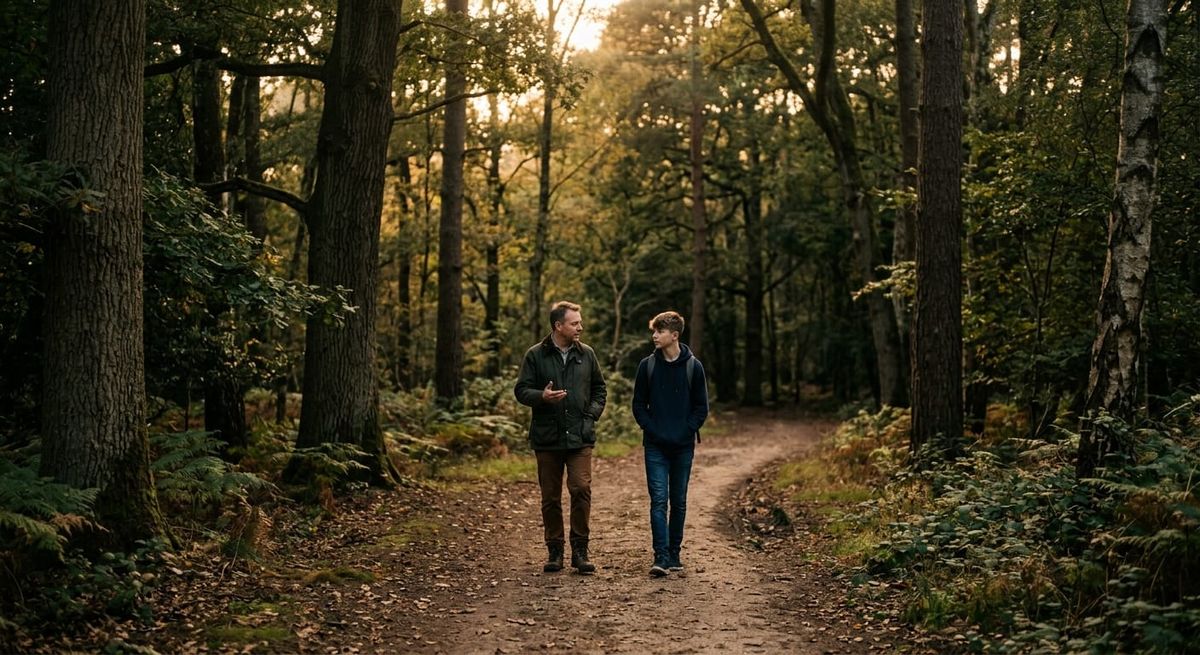
My oldest is now a teenager, and we have entered a noticeably different stage of life as parents. For the first time, perhaps in a long time, we find ourselves stepping very lightly and thinking carefully about how to do this parenting thing. It is tempting to repeat what our parents did — “It’s how I was raised and I came out just fine.” But I didn’t come out just fine. I was lost for many years and made choices that grieved God. My husband and I set out to raise our children in a distinctly Christian household — something neither of us knew personally.
We have an eight‑year gap between children. It wasn’t for lack of trying; we suffered losses along the way. So until age eight, our oldest was an only child. He was our whole world, mine especially. It was easy to focus all our attention on him and tailor our life toward bringing him up in the way he should go. He lived in that beautiful bubble of innocence where our job was simply to shield him from the awfulness of the world, and we did it gladly.
When the twins arrived, everything changed. He became a big brother and our attention was divided. And when he turned ten — with two toddlers underfoot — the dynamic shifted again. He wasn’t just the gentle helper anymore. He discovered the power of being older. He bossed. He corrected. He experimented with authority, and in so doing we witnessed our precious, friendly little boy turn into a despot. We realized we needed intentional space to parent our oldest boy through the tween years and not assume that he’ll just figure it all out because we started strong.
Now, as a teenager, his needs have changed again. He is becoming a man, trying to understand who he is, and we find ourselves constantly reviewing whether we are preparing him well to navigate the world.
We have crossed the Rubicon from the easy boundaries of childhood into the complex landscape of adolescence. Nowhere is this more evident than in the question of media — books, films, television. Every decision requires discernment. What is the actual yield here? Are we opening a door that cannot be shut, or are we wisely preparing him for a world that will eventually shove these realities in his face anyway?
We are grateful to send our children to a Classical Christian school. More than simply surrendering them to the curriculum each day, we actually depend on it to guide our parenting at home. Classical education has given us a language for what is truly at stake in adolescence: the formation of ordered loves.
Modern culture is a relentless discipling machine. Through algorithms, entertainment, and advertising, it offers counterfeit gods — autonomy, status, hyper‑individualism, and endless self‑gratification. It tells the young that their worth is measured by their consumption and social currency.
Classical Christian education confronts this directly. Augustine taught that vice is disordered love — loving lesser things more than ultimate things. The classical model aims to cultivate rightly ordered affections by aligning education with the natural developmental stages of a child:
- Grammar: Filling the mind with truth, beauty, and memory.
- Logic: Training the mind to question, analyze, and discern.
- Rhetoric: Teaching students to articulate truth with clarity and courage.
This matters profoundly in adolescence. Puberty is a season of volatility and identity confusion. Modern culture exploits this instability, urging teenagers to treat their shifting feelings as the truest thing about them. Digital feeds are engineered to bypass reason and inflame desire.
Media is one of the most powerful vectors of this cultural discipling. Which means our decisions about what our son watches are not simply about content — they are about formation.
I think parents feel two opposing impulses when facing the ubiquity of modern media.
The first is the Bubble Boy instinct — keep the media out entirely for as long as possible. Innocence, once lost, cannot be regained. A mind kept pure longer has a stronger foundation. This is deeply appealing to me. Having lost my innocence at a young age, I want to keep him in a bubble for as long as I can.
My own childhood was more like Trial by Fire. My early exposure did not strengthen me; it simply threw me into the deep end. Yes, I learned how to swim, but at great cost. I don’t recommend this. A healthier version is more like Inoculation — introducing mature themes intentionally while the child is still under your roof, using the content as a sparring partner to build moral muscle.
But both strategies carry risk.
Extended shielding means the first exposure may happen without your voice beside them. A teenager may encounter seductive, unvarnished vice with no framework for evaluation. It may even be so shocking that he chooses to keep it secret.
Early or unmitigated exposure carries the risk of habituation. If a boy constantly watches media where sexual promiscuity is treated casually, his moral imagination can become desensitized before his reasoning is mature. This is perhaps what I fear most — that my attempt to inoculate might actually desensitize. Vigilance is required.
Great literature and dramatic art have always dealt with human depravity — Shakespeare, Dostoevsky, Scripture itself. The Bible does not sanitize human brokenness; it portrays adultery, betrayal, and lust in stark detail.
Of course, if we’re being totally honest, our son isn’t asking if he’s mature enough to read Dostoevsky. He’s curious about the stupid 90s comedies on our DVD shelves and pop culture garbage he hears about from his friends. Regardless of the actual media we’re talking about, my husband and I have been working on a little checklist to evaluate the media we are considering sharing with him. The dividing line between virtuous art and destructive media usually comes down to three questions:
- How is sin framed? Is promiscuity treated as glamorous and consequence‑free, or is it portrayed honestly as something that fractures the soul?
- Is the darkness serving the light? In great stories, darkness exists to make virtue and redemption more brilliant. Gratuitous grit is just titillation.
- Does it provoke a moral reaction or numbness? Healthy mature content should disturb or challenge a teenager. If it breeds apathy or lust, it is working against your formation goals.
We are starting to dip our toes into these waters, but the price of admission is conversation. The media itself is never the point. The formation is.
We try to be sensitive to the gut‑level unease that some material might open doors too early. Parenting intuition is often the Holy Spirit using your deep knowledge of your specific child. The question is not what we consumed at thirteen, or what is generally deemed acceptable for thirteen‑year‑olds, but what is good for our thirteen‑year‑old. And honestly, if every viewing requires a multi‑hour deconstruction and the ratio of garbage to genuine value is skewed, the juice may not be worth the squeeze. We can take a break from testing the boundaries and just stick to the kid-safe content that we already love. I’m actually quite proud of how he’s guarding his own boundaries and engaging in intentional experimentation and conversation.
We are raising a boy who is becoming a man. The goal is not to raise a young man who is merely sheltered from the culture, or one who feels comfortable within it, but one who is intentionally discipled against it. We must protect his innocence, but more importantly we must help shape his imagination so that when he eventually faces the world on his own, he recognizes both the darkness and the light, and knows which one he belongs to.
So may God grant us wisdom as we walk this narrow road — wisdom to know when to shield and when to prepare, courage to hold the line where his heart needs guarding, and gentleness to guide him through the fragile years of becoming. May his imagination be shaped by truth, his affections ordered toward Christ, and his steps anchored in the One who keeps him even when we cannot. Stand strong, parents. The Lord is faithful.